
Emerald Ash Borer Information and Resources
Haga clic aquí para español
UPDATE 12/19/25:
Ash Tree Inventory Coming to Woodburn
The Oregon Department of Forestry recently partnered with City of Woodburn staff and the Pudding River Watershed Council to provide training on Oregon TreePlotter, a free and easy-to-use tree mapping system. Beginning in early 2026, Watershed Council staff will use this tool to inventory all ash trees located in public rights-of-way and on City-managed properties throughout Woodburn.
This inventory will help identify where ash trees are located and which may be at risk from the Emerald Ash Borer (EAB)—a destructive insect that has recently been detected in our area. The project is partially funded through a grant from the Marion Soil and Water Conservation District.
The goal is to complete the inventory by early summer 2026. Once finished, a public-facing map will be available to help both the City and community members see where ash trees are located and better understand next steps for care and response. In City-managed natural areas, the focus will be on ash trees that could pose a risk to structures, trails, roads, or power lines. More details will be shared once the data collection work is complete.
What Can You Do?
All ash tree species in Oregon are vulnerable to Emerald Ash Borer. Once infested, an ash tree typically dies within 3–7 years. As trees decline, they become very brittle and can pose serious risks to people, property, and infrastructure.
The most important step you can take is to find out whether you have ash trees on your property. While the City is responsible for managing ash trees on City-owned land, private property owners are responsible for trees on their own property, including those located in adjacent rights-of-way.
After the inventory is complete, the City will share information about the free online mapping tool to help residents identify ash trees and stay informed.
Managing Ash Trees
Before removing an ash tree, it is important to plan how the resulting wood waste will be handled safely and legally. In Marion County, ash wood cannot be moved outside of the EAB quarantine area, as this can contribute to the spread of the pest.
Best practices include leaving infested tree material on site when possible—such as chipping it, using it as firewood, or allowing it to decay naturally. If material must be moved, transport it only as far as necessary.
Trees that measure 24 inches or more in diameter at breast height (DBH)—measured 4.5 feet above the ground—may require a tree removal permit, and replacement planting may be required. More information is available on the City’s website:
Help With Replacement Trees
The City and local partners offer programs that provide free or reduced-cost replacement trees for qualifying properties:
- Woodburn Tree Program: https://www.woodburn-or.gov/community-services/page/woodburn-tree-program
- Marion County Stream Tree Program: https://www.co.marion.or.us/PW/ES/waterquality/Pages/outreach.aspx
Thank you for helping protect Woodburn’s urban forest and keeping our community safe and resilient.
UPDATE 9/25/25:
Update on Emerald Ash Borer (EAB) in Woodburn
The City continues to actively monitor and respond to the presence of Emerald Ash Borer (EAB) in our community. Recently, more trees in Wyffels Park, located near the southern end, close to Lincoln Street, were found to have an EAB infestation. These trees are scheduled for removal in October.
In the meantime, here are a few important updates on our efforts:
• Community Awareness – We continue to share information through our social media channels. With recent reports of EAB spreading into the Portland area, awareness is critical. Experts from the Oregon Department of Forestry have confirmed that eradication is not possible, and the best strategy is known as SLAM (SLow Ash Mortality), which helps communities prepare, respond, and reduce long-term costs. Learn more here: Oregon EAB Information.
• Ash Tree Inventory – The City is close to finalizing a contract with the Pudding River Watershed Council, whose experts will conduct an ash tree inventory in Woodburn for public right-of-way and city-managed properties. This project will require time and is expected to be completed by spring 2026. Once finalized, the data will be available to the public through Oregon TreePlotter, similar to what is already available for larger cities such as Salem and Eugene: TreePlotter Oregon. Property owners are encouraged to learn to identify ash, olive or white fringe trees - all three are susceptible to EAB - or consult with a local tree care provider to determine if you have ash, olive or white fringe trees on your property to discuss treatment options or if removal and replacement is right for you.
• Grant Funding – The City is preparing two grant applications. If these grants are awarded, they will be used to help cover costs related to the tree inventory, future ash tree removal, and anticipated tree replacement and replanting to mitigate the loss of canopy due to EAB.
• EAB Response Plan – The City has developed a draft EAB Response Plan, as recommended by the Oregon Department of Forestry and Department of Agriculture. Once finalized, this plan will help guide City staff in prioritizing response areas, identifying ash trees that may be eligible for treatment, and determining those that should be removed immediately to help slow the spread of EAB.
• The City is committed to keeping the community informed and taking proactive steps to manage the impact of Emerald Ash Borer. To aid in this, the City will continue to waive the tree removal permit fee for the removal of Ash trees on community member properties. Marion County remains under quarantine, so please refrain from moving firewood. Buy or collect firewood within 10 miles of where you plan to burn it.
Thank you for your continued support as we work together to protect Woodburn’s tree canopy and prepare for the future.
UPDATE 2/25/25: Emerald Ash Borer (EAB)
At last night’s City Council meeting, staff provided an update on the local detection of the Emerald Ash Borer. To slow its spread, the City will begin removing infected ash trees.
**Infected trees were identified in Wyffles Park in August 2024. They are scheduled to be removed at the end of March 2025.**
While the City did not receive forestry grant funding for mitigation efforts related to the Emerald Ash Borer, it remains committed to exploring alternative funding options to support residents in mitigating and responding to the impacts of EAB. Resources on EAB identification, mitigation, and upcoming events are available at www.OregonEAB.com, including a homeowner pocket guide now in four additional languages.
The City will continue sharing updates and resources as they become available via website, Facebook @city of woodburn, and WoodburnNOW app (available in iphone/android app stores).
________________________________________________________________________________________________
Emerald Ash Borer (EAB) Information and Resources
(Information from Oregon Department of Forestry)
Emerald ash borer (Agrilus planipennis) — commonly called EAB — is a destructive, invasive beetle that infests and kills ash trees (Fraxinus species). EAB has spread across North America since it was first detected in Michigan in 2002, killing hundreds of millions of ash trees. EAB was confirmed in Oregon in 2022, the first known case on the West Coast. Once EAB arrives in an area, it cannot be eradicated —which means it doesn't go away. Even though EAB will kill many ash trees in Oregon, there are steps we can take to slow its spread and limit its impacts.
Opens in new window
PDF Download
Word Download
Excel Download
PowerPoint Download
Document Download
Opens in new window
PDF Download
Word Download
Excel Download
PowerPoint Download
Document Download
Opens in new window
PDF Download
Word Download
Excel Download
PowerPoint Download
Document Download
Opens in new window
PDF Download
Word Download
Excel Download
PowerPoint Download
Document Download
Opens in new window
PDF Download
Word Download
Excel Download
PowerPoint Download
Document Download
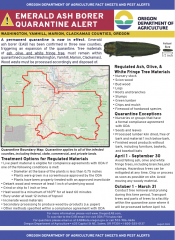
Quarantine alert for the following counties: Marion, Clackamas, Yamhill, and Washington.
See below in the "Documents" section to read the full quarantine information.
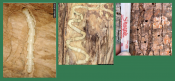
What you can do:
•Do not move firewood or woody debris more than 10 miles from where you buy or collect it.
•Do not plant ash trees (Fraxinus species). Instead, plant a diversity of trees and plants that are appropriate for the conditions of the site.
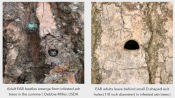
•Learn to identify ash trees and the signs and symptoms of an EAB infestation.
•If you think you have found an EAB infestation, report it to the Oregon Invasive Species Hotline (online) or call 1-866-INVADER.
•Determine if you have ash on your property. If you do, discuss your options with an ISA-certified arborist before taking action.
•Sign up for Oregon Tree Health Threats, a monthly newsletter from Oregon Dept. of Forestry covering EAB and other forest health issues.
Taking action now will help minimize the impacts of EAB in Oregon.
Please see OregonEAB.com for additional information and resources on Emerald Ash Bore.
Supporting Documents
 Quarantine flyer (2 MB) Quarantine flyer-spanish (6 MB)


